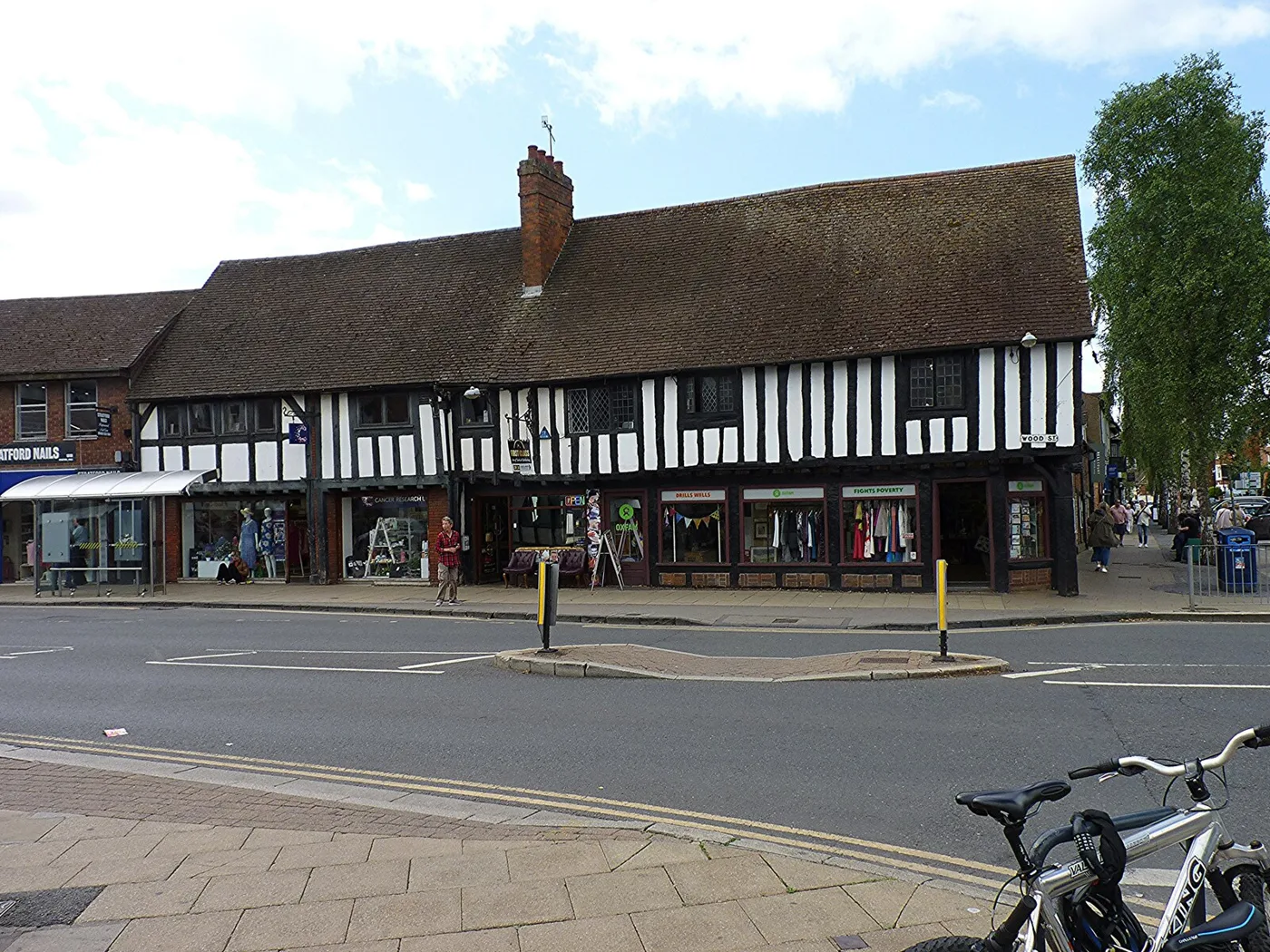

The district council has put its remaining £32,000 Evergreen fund into shop front grants worth up to £5,000, half the cost, for independent businesses only.
Independent businesses across Stratford-on-Avon district will be able to claim up to £5,000 towards repainting, repairing or resigning their shop fronts, under a grant scheme the district council approved on 24 August. The scheme is funded with £32,000, the whole of what is left in the council’s Evergreen fund.
Chains and groups are excluded. So is any business without a high street property.
The decision was taken by the Leader of the Council and published on 25 August. It endorses the approach set out in a draft proposal and approves spending the remaining Evergreen money on it.
What you can get
- A maximum of 50% of costs, capped at £5,000. The business finds the other half.
- Paid after the work is done, on submission of the invoice, not up front. The proposal notes there “might be a case” for paying up front where a business cannot otherwise proceed, but that is not what the scheme currently says.
- Grants are paid excluding VAT for businesses that are VAT registered.
At the full £5,000 the £32,000 stretches to six awards with £2,000 left over. Because every pound has to be matched, the fund is designed to put at least £64,000 of work into the district’s shop fronts.
What the money can pay for
The proposal splits eligible work into three groups:
- Enabling work: design costs, planning costs and legal costs.
- Renewal, refurbishment and renovation of the shop front fabric: repainting, repairs and replacement.
- New signage: replacing or improving existing signs, and new business signs, in both cases subject to permission.
Everything on that list is the front of the building. This is not a fund for fitting out the inside of a shop, or for stock, or for rent.
Who can apply
- Businesses with a “High Street” property in Stratford-on-Avon district. The proposal puts high street in quotation marks and does not define which streets qualify.
- Landlords with a vacant high street property, provided it has been available to let within the last six months and will be marketed again once the work is finished. That is a deliberate route to tidying up empty units.
- Independent businesses only. Chains and groups are excluded.
- Planning permission, listed building consent and the landlord’s consent must all be in place where they are needed. In a district with as much listed frontage as this one, that is not a formality.
The catch: there is no application form yet
The document the council approved is headed “DRAFT Evergreen Proposal”, and the process in it is described as “proposed” and “suggested” rather than settled. No opening date has been published, and no application form or guidance page has appeared on the council’s website.
The process the council has sketched runs in two stages:
- The applicant checks the guidance and their own eligibility.
- They submit a short online application with a project description, estimated costs and timescales.
- The council checks eligibility and fit, then asks for supporting documents.
- The applicant supplies quotes, photographs, designs and evidence of consents.
- A small panel scores the applications against agreed criteria.
- Successful applicants sign a grant offer letter or funding agreement.
- The work is done within an agreed timescale.
- The applicant submits invoices, completion photographs and evidence of the match funding.
- The council checks the evidence and pays.
- Outcomes are recorded, with before-and-after photographs.
The council also intends to evaluate the first phase using a social return on investment model, measuring the match funding unlocked, the improvement to each business and the wider effect on the high street.
What the Evergreen fund is, and what the council has not said
The decision approves “the use of the remaining Evergreen fund (£32,000)”. The council’s published record does not explain where the Evergreen fund came from, how much was originally in it or what the rest of it was spent on. We could not find a council page or committee report describing it, and the decision notice does not link to one.
Two other things are not in the published papers. The first is when applications open. The second is how the “high street” test will be applied across a district that stretches from Studley in the north to Shipston-on-Stour in the south, and takes in Alcester, Henley-in-Arden, Southam, Bidford-on-Avon and Wellesbourne as well as Stratford-upon-Avon itself.
What it means for you
If you run an independent shop, cafe or salon in one of the district’s town or village centres, this is a real £5,000, and the pool is small enough that six or seven applicants will take it. Two things are worth doing now rather than when the form appears:
- Get your quotes. The scheme wants estimated costs at application and firm invoices at payment, so a business with a quote in hand is ahead.
- Check your consents. If your frontage is listed or in a conservation area, listed building consent or planning permission for new signage takes time, and the scheme will not pay without it. You can check what is in the pipeline near you on our planning news page.
The named contact on the council’s record is Ali Chafekar, Economic Development and Investment Manager.
Sources
- Stratford-on-Avon District Council, decision 4224: Evergreen Shop Front Improvement Grant, decision taken 24 August 2026 and published 25 August 2026, for the approval, the £32,000 and the reasons given.
- Appendix 1, DRAFT Evergreen Proposal (PDF), published with that decision, for the eligible works, the eligibility rules, the £5,000 cap, the 50% match, the VAT treatment, the ten-step process and the evaluation method.
- Issue record for the Evergreen Shop Front Improvement Grant, for the named council contact.
The figures above are the council’s own. The scheme document is a draft and the council has not published an opening date, so check with the council before committing to work on the strength of a grant.
Have your say